Author, Steve Davies|LocalBizNet.com
Most business owners focus on one thing when it comes to online reviews: getting more of them.
And while review quantity certainly matters, there's another factor that often gets overlooked—the quality of what's actually being written.
Think about the last time you searched for a local business. Which review would be more helpful?
"Great company! Five stars!"
Or:
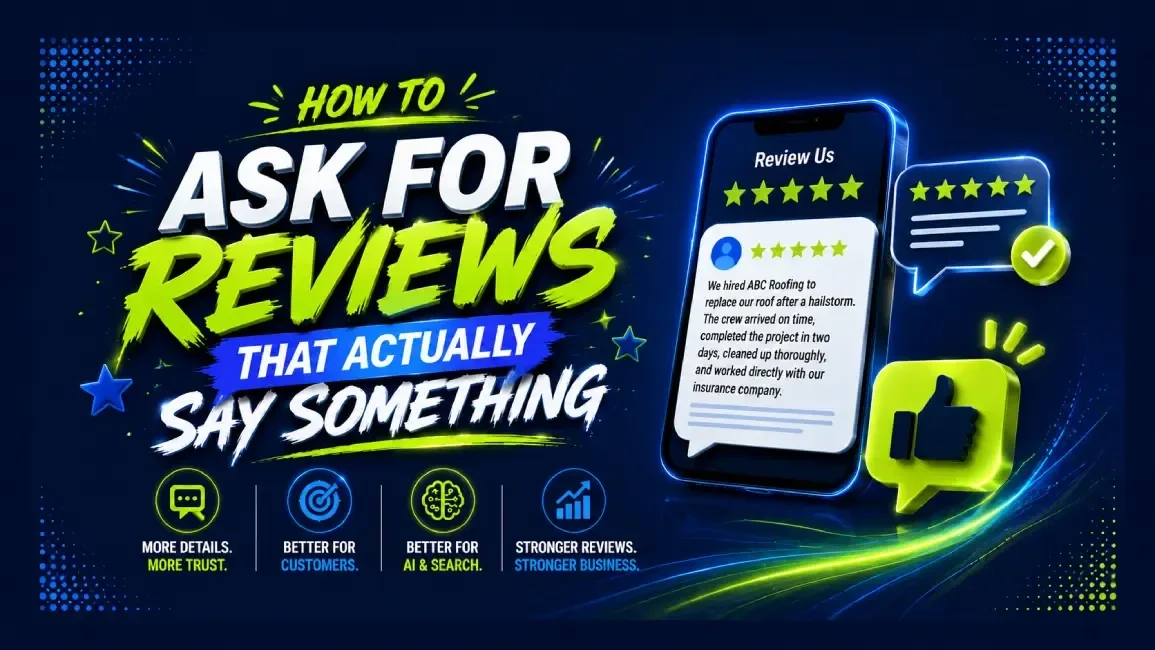
"We hired ABC Roofing to replace our roof after a hailstorm. The crew arrived on time, completed the project in two days, cleaned up thoroughly, and worked directly with our insurance company throughout the process."
Both reviews are positive. Both are five-star reviews. But one tells a much richer story.
That's important because reviews are no longer read only by potential customers. Search engines, maps, and increasingly AI-powered search tools analyze review content to better understand what a business does, who it serves, and why customers recommend it.
In other words, specific reviews help both people and technology understand your business.
Why Generic Five-Star Reviews Aren't as Valuable as They Used to Be
Many businesses celebrate every new five-star review, regardless of what it says.
That's understandable. Positive reviews build trust and improve credibility.
However, from an information standpoint, a review that simply says:
"Great service!"
doesn't tell anyone very much.
It doesn't explain what service was provided, what problem was solved, where the customer was located, or what made the experience memorable.
Compare that to:
"LocalBizNet helped us redesign our website and improve our Google Business Profile. Within a few months we started receiving more calls from local customers and our online presence looked much more professional."
That review provides context. It identifies services, outcomes, and customer experiences.
For potential customers, that information helps answer important questions. For search engines and AI systems, it provides additional signals about the business and the types of problems it solves.
The goal isn't to coach customers on what to write. The goal is to make it easier for them to share meaningful details about their experience.
Why AI Pays Attention to Review Content
When someone asks an AI tool to recommend a business, the system doesn't simply count stars.
It looks for patterns.
Reviews help establish what a business is known for. They reveal common customer experiences, frequently mentioned services, strengths, specialties, and outcomes.
Imagine two HVAC companies.
The first has dozens of reviews that simply say:
"Great service."
"Highly recommend."
"Five stars."
The second has reviews mentioning emergency AC repairs, fast response times, professional technicians, transparent pricing, and successful installations.
Which business gives AI more information to work with?
The answer is obvious.
Specific reviews create a clearer picture of what customers actually experience.
If you've ever wondered why ChatGPT, Gemini, or Google's AI Overviews seem to recommend some businesses more often than others, review content is often part of the answer. Reviews help AI systems understand what a business is known for, what customers value most, and what types of problems the business consistently solves.
Of course, reviews are only one piece of a much larger picture. AI systems also evaluate business listings, websites, Google Business Profiles, online discussions, and other trust signals before recommending a business.
For a broader look at how AI-powered search tools decide which businesses to recommend, read our guide:
Why Does ChatGPT Recommend My Competitor Instead of Me?
The more clearly customers describe their experience, the more useful that information becomes—not only for future customers but also for the search engines and AI tools trying to understand your business.
The Best Time to Ask for a Review
One of the simplest ways to improve review quality is to ask at the right moment.
The ideal time is shortly after a successful interaction when the experience is still fresh in the customer's mind.
Whether you're a restaurant owner, attorney, accountant, contractor, healthcare provider, or retailer, customers tend to provide more detailed feedback when they can easily recall what happened.
Waiting weeks or months often results in shorter, less descriptive reviews because details have already faded.
How to Ask Without Sounding Scripted
Many business owners make the mistake of asking:
"Can you leave us a review?"
There's nothing wrong with that question, but it doesn't encourage much detail.
A better approach is to give customers something specific to think about.
For example:
"If you decide to leave a review, would you mind sharing a little about the service we provided and what stood out about your experience?"
That simple prompt often leads to more meaningful feedback.
The key is not to tell customers what to write.
Instead, encourage them to describe their experience in their own words.
Better Review Request Examples
Here are a few examples that can be used in email, text messages, or face-to-face conversations.
Instead of:
"Please leave us a review."
Try:
"If you have a moment, we'd appreciate a review. It would be especially helpful if you shared a few details about the service you received and your overall experience."
Instead of:
"Tell people what a great job we did."
Try:
"Would you mind sharing what problem you were trying to solve and how your experience went?"
Instead of:
"Leave us a five-star review."
Try:
"We value honest feedback. If you'd like to leave a review, we'd appreciate hearing about your experience."
Notice the difference.
The focus is on authenticity and details—not ratings.
Weak Reviews vs. Strong Reviews
Consider the difference between these examples.
Weak Review
"Great company. Highly recommend."
Strong Review
"We needed help updating our website and improving our online presence. The team explained everything clearly, redesigned our site, and helped us improve our visibility in local search results. Communication was excellent throughout the process."
Weak Review
"Fast service."
Strong Review
"Our air conditioner stopped working during a heat wave. The technician arrived the same day, diagnosed the problem quickly, and had our system running again within a few hours."
Weak Review
"Five stars."
Strong Review
"The staff was friendly, professional, and responsive. They answered all of our questions, kept us informed throughout the project, and delivered exactly what they promised."
The stronger reviews provide context, detail, and outcomes. They help future customers understand what to expect.
Questions That Encourage Better Reviews
If customers seem unsure what to write, consider asking open-ended questions such as:
-
What problem were you trying to solve?
-
What service did we provide?
-
What stood out about your experience?
-
How did our team help you?
-
Would you recommend us to others and why?
These questions help customers organize their thoughts without putting words in their mouths.
What Not to Do
As businesses become more aggressive about collecting reviews, it's important to understand where the line is.
Avoid offering money, discounts, gifts, rebates, or incentives in exchange for reviews.
Avoid asking only happy customers for reviews while discouraging feedback from others.
Avoid writing reviews on behalf of customers.
Avoid creating fake reviews or encouraging employees, friends, or family members to leave misleading reviews.
Recent FTC actions have placed increased scrutiny on deceptive review practices, and many review platforms have strengthened their enforcement policies as well.
The safest approach is also the simplest: request honest feedback from real customers and make the process easy.
Better Reviews Create Better Signals
The best reviews do more than increase your star rating.
They tell a story.
They help potential customers understand what it's like to work with your business. They provide context that search engines and AI systems can use to better understand your services. And they create a more complete picture of the experience you deliver.
Rather than focusing exclusively on collecting more reviews, focus on encouraging more meaningful ones.
A handful of detailed, authentic reviews can often provide more value than dozens of generic comments that simply say "Great service."
Need Help Building a Better Review Strategy?
Most businesses aren't struggling because they lack satisfied customers. They're struggling because they don't have a consistent process for requesting meaningful feedback.
If you want reviews that actually help, our FAQ page covers the rest of the request-and-response process.
At LocalBizNet, we help businesses develop review-generation strategies that encourage authentic, detailed customer feedback while remaining compliant with platform policies and review guidelines.
If you'd like help improving the quality of your reviews, strengthening your online reputation, and increasing the signals that search engines and AI-powered search tools rely on, we'd be happy to review your current process and provide practical recommendations.
Contact LocalBizNet today for a complimentary online reputation and review strategy consultation.
Frequently Asked Questions For This Article