

Houston, Texas – The City Behind the Communities
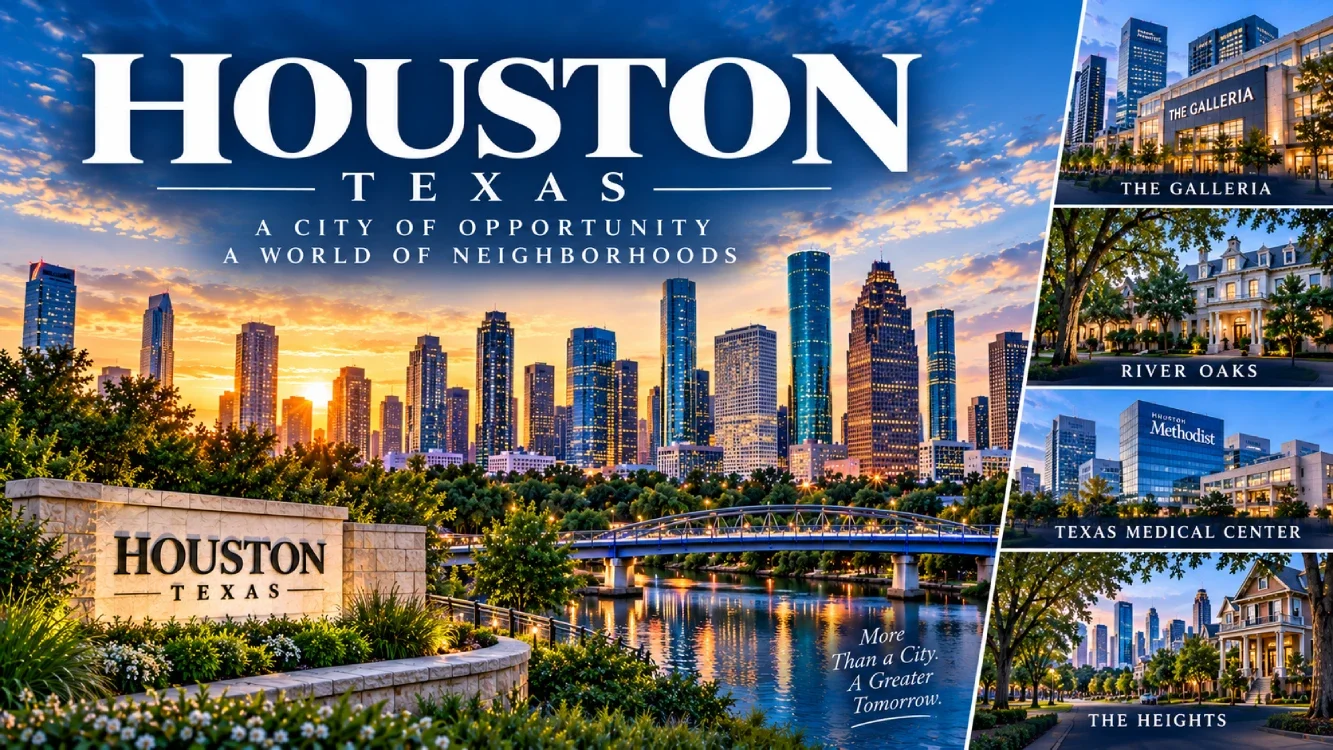
Houston is the anchor of everything LocalBizNet does.
But Houston isn't really one market. It's a collection of neighborhoods, business districts, suburbs and communities, each with its own character and customer base. A business in the Heights may be reaching a very different audience than one in River Oaks, the Galleria area, the Texas Medical Center or northeast Houston.
That diversity is one of the things that makes Houston such an interesting place to live and do business.
Houston's Beginnings
Houston was founded in 1836 by brothers Augustus Chapman Allen and John Kirby Allen, who purchased more than 6,600 acres along Buffalo Bayou shortly after the Texas Revolution.
The brothers promoted their new town aggressively, naming it after General Sam Houston. Their timing was good. Houston became the capital of the Republic of Texas in 1837, although that distinction lasted only until 1839 when the capital moved to Austin.
Houston's location proved more important than its brief time as the capital. Its connection to Buffalo Bayou and Galveston Bay helped establish the city as a commercial center, while railroads arriving in the 1850s strengthened its role as a transportation and distribution hub.
The Houston Ship Channel, completed in 1914, and the discovery of oil at Spindletop in 1901 helped set the stage for the city's transformation into one of the nation's major energy centers.
A City That Keeps Reinventing Itself
Houston's growth has been remarkable.
The city expanded well beyond its original downtown core, annexing surrounding communities and developing outward as new industries and waves of residents arrived. Energy played a huge role, but Houston eventually became much more than an oil and gas city.
Today, the region's economy includes healthcare, aerospace, technology, manufacturing, international trade, education, finance, construction and countless small businesses.
Houston's lack of traditional zoning has also contributed to its distinctive development pattern. Neighborhoods and commercial districts can change dramatically within just a few miles, which is one reason knowing the local market matters so much for businesses.
Houston's Neighborhoods Tell Different Stories
One of the best ways to understand Houston is to look at its neighborhoods.
The Heights began as a separate streetcar suburb in the late 1800s and was annexed by Houston in 1918. Today, its tree-lined streets, historic homes, restaurants, boutiques and revitalized commercial areas have made it one of the city's most recognizable neighborhoods.
Montrose has developed a reputation for its arts, restaurants, independent businesses and eclectic character. The Menil Collection and Rothko Chapel are among its best-known cultural institutions, but much of Montrose's appeal comes from the neighborhood itself and its mix of longtime businesses and newer development.
River Oaks is one of Houston's most prestigious residential communities. Established in the 1920s, the area is known for large homes and estates, mature landscaping and the River Oaks Country Club. Nearby River Oaks District adds high-end shopping, restaurants and entertainment to the area.
Uptown Houston, centered around the Galleria, is a very different environment. It functions almost like a second downtown, with high-rise offices, hotels, restaurants, residential towers and major retail. For businesses, it represents one of Houston's most concentrated commercial districts.
Midtown and East Downtown have also undergone significant changes. Former industrial and warehouse areas have evolved into neighborhoods featuring restaurants, breweries, apartments, offices, entertainment and mixed-use development.
And then there are the many communities beyond the Inner Loop, including areas such as Memorial, Westchase, Meyerland, Sharpstown, Clear Lake and countless other neighborhoods that each have their own identity.
That's one of the defining characteristics of Houston: where a business is located can tell you a great deal about who its customers are.
The Galleria and Houston's Shopping Districts
The Galleria is one of Houston's most recognizable destinations and a major part of the Uptown area.
It is the largest shopping center in Texas and one of the largest in the United States, combining major retailers, luxury brands, restaurants, hotels and an indoor ice-skating rink.
But shopping in Houston goes well beyond the Galleria.
River Oaks District provides an upscale open-air alternative, while Rice Village combines retail and dining near Rice University. Highland Village and numerous neighborhood shopping centers give residents options throughout the city.
For local businesses, that means competition can be intense. Houston consumers have an enormous number of choices, and a company's location is only one part of how customers decide where to spend their money.
Houston's Business Environment
Houston's economy is large enough to support virtually every type of business.
Major corporations operate alongside independent restaurants, contractors, medical practices, professional services, retailers and thousands of smaller companies.
The Texas Medical Center is one of the clearest examples of Houston's economic diversity. Located south of downtown near Hermann Park, it includes more than sixty member institutions, including MD Anderson Cancer Center, Texas Children's Hospital, Houston Methodist and Memorial Hermann.
The Medical Center is not simply a collection of hospitals. It represents one of Houston's largest employment and economic centers, drawing patients, healthcare professionals, students and visitors from around the world.
Getting Around Houston
Houston's size makes transportation a major part of everyday life.
The freeway system is built around several major loops and radial highways. Loop 610 surrounds the central city, Beltway 8 provides another major route around the metro area, and the Grand Parkway — State Highway 99 — forms an increasingly important outer loop.
Interstate 10, Interstate 45, US 59/Interstate 69 and US 290 connect the central city with major suburban areas.
For LocalBizNet and the businesses we work with, these transportation patterns matter because a company's true service area often extends well beyond the neighborhood where its physical address is located.
Houston and Its Surrounding Communities
Houston doesn't stop at the city limits.
The greater Houston area includes dozens of distinct communities, many of which have grown into major markets of their own.
LocalBizNet works directly with communities including Kingwood, Humble, Atascocita, Spring, The Woodlands and Conroe, each of which has its own location page and local identity.
Other major communities throughout the region include Sugar Land, Missouri City, Katy, Cypress, Pearland, League City, Pasadena and Baytown.
For businesses, this distinction is important. Someone searching for a service in Kingwood may not think of themselves as searching “Houston,” even though Kingwood is part of the greater Houston metropolitan area.
Local search works at the community level.
What Makes Houston Different?
Houston can be difficult to describe because there isn't really one Houston.
There is downtown Houston and the Energy Corridor. There is River Oaks and the Heights. There is the Galleria and the Medical Center. There are established neighborhoods, newer developments and communities that have become almost cities within the larger metropolitan area.
That variety is also what makes Houston such a strong market for local businesses.
A company can serve a very specific neighborhood while also reaching customers across a much larger geographic area. The challenge is making sure those customers can find the business when they're looking.
For a local business, being visible in Houston isn't simply about having a website. It means understanding the communities you serve, maintaining a strong online presence, building a good reputation and making it easy for potential customers to understand why they should choose you.
That's where local marketing becomes especially important in a market as large and competitive as Houston.
Frequently Asked Questions About Houston
When was Houston founded?
Houston was founded on August 30, 1836, by brothers Augustus and John Kirby Allen, who named the settlement after General Sam Houston.
What is Houston best known for?
Houston is internationally known for its energy industry, aerospace and NASA, healthcare, international commerce and its diverse economy and population.
What is Houston's most prestigious neighborhood?
River Oaks is widely regarded as one of Houston's most prestigious residential communities, known for its large estates, country club and nearby upscale shopping.
What is the Galleria?
The Galleria is a major shopping and entertainment destination in Houston's Uptown area and the largest shopping center in Texas.
What is the Texas Medical Center?
The Texas Medical Center is a massive medical complex south of downtown Houston containing more than sixty member institutions and serving as one of the city's most important healthcare and employment centers.
What communities are near Houston?
The greater Houston region includes communities such as Kingwood, Humble, Atascocita, Spring, The Woodlands, Conroe, Katy, Cypress, Sugar Land, Missouri City, Pearland and League City, among many others.