

The Woodlands, Texas: Where Nature, Community, and Opportunity Come Together
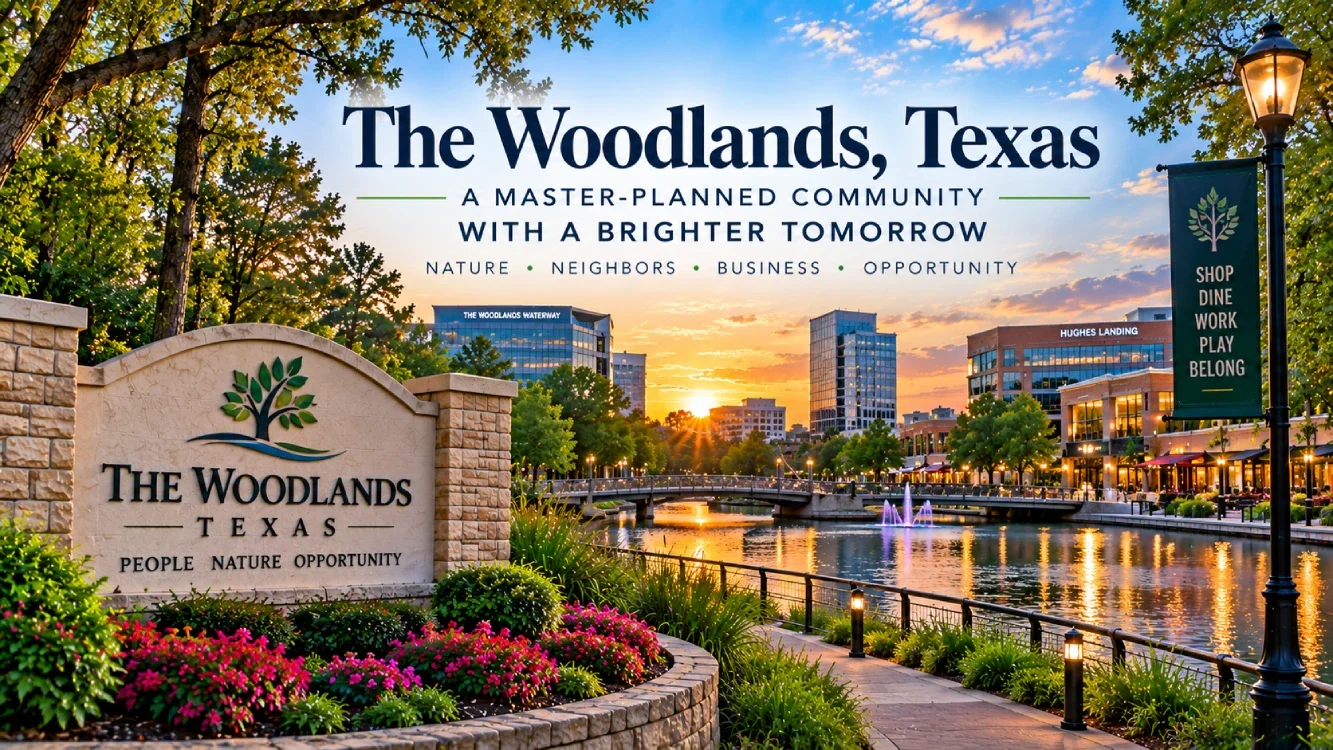
The Woodlands is unlike most communities in the Houston area.
It wasn't simply built because developers found a convenient piece of land along a growing highway. From the beginning, The Woodlands was designed around a much larger idea: create a community where homes, businesses, schools, parks, trails, shopping, and entertainment could all exist within a carefully planned natural setting.
That vision has made The Woodlands one of the most recognizable communities in the Houston metropolitan area, and one of the most important business and residential centers north of Houston.
Understanding how The Woodlands was designed helps explain why it has developed such a distinctive identity, and why businesses here need to understand the community they’re trying to reach.
A Vision That Started in the Piney Woods
The story of The Woodlands begins with George P. Mitchell, a Houston oil and gas entrepreneur who saw something in the heavily wooded land north of Houston that others might have overlooked.
Beginning in the 1960s, Mitchell assembled roughly 28,000 acres of Piney Woods forest with the goal of developing a community without eliminating the natural character that attracted him to the area in the first place.
Instead of creating another collection of subdivisions surrounding a highway interchange, Mitchell envisioned something much more self-contained. His planners incorporated extensive forests and green space into the design, ultimately preserving a significant portion of the community's natural landscape.
The first village, Grogan’s Mill, officially opened on October 19, 1974, with fewer than 40 founding families. From there, The Woodlands expanded one village at a time. Panther Creek followed in 1977, with Cochran’s Crossing and Indian Springs arriving in 1984. Alden Bridge, College Park, Sterling Ridge, and Creekside Park followed over the next several decades.
Today, those eight villages form the residential foundation of The Woodlands.
More Than a Collection of Neighborhoods
One of the things that makes The Woodlands different is the relationship between its villages and the larger community.
Each village was planned with nearby schools, shopping, parks, and other amenities, while the community as a whole developed a central destination that eventually became The Woodlands Town Center.
That planning philosophy is still visible today.
You can live in one of the residential villages, travel along the extensive trail system, spend an afternoon at The Woodlands Waterway, attend a concert at the Cynthia Woods Mitchell Pavilion, shop at The Woodlands Mall, or meet friends at one of the many restaurants throughout the area, all without leaving the community.
It's a level of integration that was unusual when The Woodlands was first conceived and remains one of its defining characteristics today.
The Woodlands Waterway and Town Center
The Woodlands Town Center has become the community's downtown.
At its heart is The Woodlands Waterway, a landscaped and walkable canal district surrounded by restaurants, shops, offices, public art, and entertainment. Hughes Landing adds another major mixed-use destination along Lake Woodlands, combining offices, restaurants, and entertainment in a lakefront setting.
This part of The Woodlands also demonstrates how different the community can feel from a traditional suburban commercial district.
Rather than parking lots and isolated businesses separated by major roads, the Town Center encourages people to park once and walk between destinations.
The result is a genuine gathering place for residents, workers, and visitors, and an important business district for the entire north Houston region.
Parks, Trails, and the Outdoors
The name “The Woodlands” isn't just a marketing phrase.
Nature remains a major part of the community's identity.
The Woodlands has more than 100 parks and over 200 miles of hiking and biking trails, along with the 200-acre Lake Woodlands. The trail system connects neighborhoods with parks, schools, village centers, and Town Center destinations.
For many residents, these trails are more than recreational amenities. They're part of everyday life.
The community's natural setting is one of the reasons The Woodlands has been able to maintain a sense of separation from the much larger Houston metropolitan area surrounding it.
A Major Destination for Entertainment
The Cynthia Woods Mitchell Pavilion is another important part of The Woodlands' identity.
Opened in 1990 and named after George Mitchell's wife, Cynthia, the outdoor amphitheater has become one of the area's best-known entertainment venues. Its schedule brings major touring artists to The Woodlands while also supporting local arts and cultural programming.
The Pavilion is located within Town Center, adding another reason for people from throughout the Houston area to visit The Woodlands.
For local businesses, that steady flow of residents and visitors creates opportunities that extend well beyond the community's residential population.
Schools, Education, and Business
The Woodlands has also developed into an important center for education and employment.
The community includes approximately 23 public schools and 10 private schools, along with higher-education facilities including Lone Star College–Montgomery and a Sam Houston State University center in College Park.
But The Woodlands is far more than a residential community.
Approximately 2,700 businesses operate here, including headquarters for major corporations. That makes The Woodlands an employment center in its own right rather than simply a place where people live while commuting into Houston.
For local businesses, that creates a diverse customer base made up of residents, employees, professionals, visitors, and other businesses.
Getting Around The Woodlands
Interstate 45 remains the primary connection between The Woodlands and Houston, running directly through the community.
Inside The Woodlands, however, the transportation philosophy is different.
The extensive network of walking and biking trails connects many neighborhoods with schools, parks, village centers, and Town Center. The Waterway district is also designed around pedestrian access.
That doesn’t mean residents never need a car (this is still Texas), but the ability to walk or bike between so many destinations is one of the characteristics that separates The Woodlands from many other Houston-area suburbs.
A Community With a Different Form of Government
There's another interesting detail about The Woodlands that many people outside the area may not realize.
It isn't an incorporated Texas city.
The Woodlands operates as a township with its own elected board and community governance structure. This allows the community to manage services and amenities such as parks, pathways, public safety, and cultural programming without formally becoming a city.
That unusual structure is part of the community's history and has helped maintain many of the development standards that have defined The Woodlands since its early years.
Why The Woodlands Has Such a Distinct Identity
After more than fifty years of growth, it’s easy to forget how unusual the original concept was.
It was designed around a philosophy: preserve nature, create connected neighborhoods, provide nearby amenities, and build a community where residential, commercial, and recreational development could work together.
That philosophy is still visible.
The tree-lined roads, carefully maintained landscaping, trails, lakes, village centers, and Town Center all contribute to an environment that feels deliberately different from many other parts of the Houston area.
For businesses, that matters.
People who live and work in The Woodlands have become accustomed to a certain level of planning and presentation. A business trying to establish itself here isn't simply competing on price or location. Its online presence, reputation, visibility, and overall presentation become part of how potential customers evaluate it.
That's one reason local marketing in The Woodlands requires more than simply putting a business name and phone number online.
Marketing Services for Businesses in The Woodlands
LocalBizNet helps businesses in The Woodlands build the kind of online presence this community expects. We optimize Google Business Profiles so you show up in the Map Pack when residents search nearby, generate a steady stream of authentic Google reviews, and design fast, professional websites that turn visitors into customers. We also handle local SEO, social media management, branding, and video production, all coordinated as one strategy.
Whether your business is near Town Center, in one of the villages, or serving customers across the I-45 corridor, we’ll show you exactly where you’re losing visibility and how to fix it.
Book a free 30-minute strategy call to talk through your business and your goals.
The Woodlands Continues to Evolve
The original vision has clearly grown far beyond those first few dozen families in Grogan's Mill.
Today, The Woodlands combines established neighborhoods with major corporate offices, shopping, restaurants, entertainment, education, healthcare, and outdoor recreation.
Yet despite that growth, the community's original character remains surprisingly recognizable.
The trees are still there. The trails are still there. The villages are still connected to the larger community. And the basic idea behind The Woodlands, creating a place where development and nature can coexist, continues to shape how the community grows.
That may ultimately be the most interesting thing about The Woodlands.
It isn't simply a successful suburb. It is a long-running experiment in community planning that has become a major part of the Houston region.